
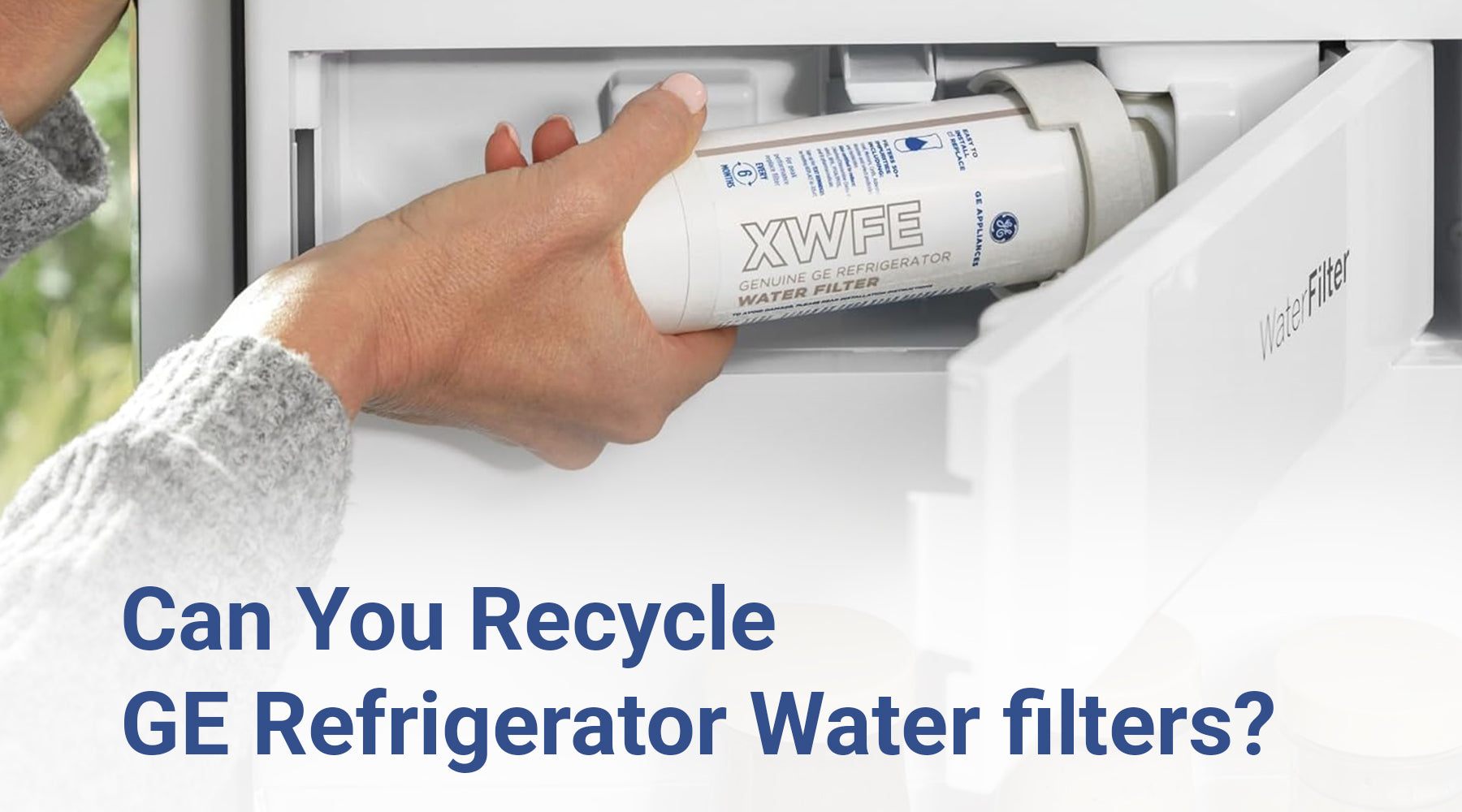
You just pulled the old filter out of your fridge and now you are staring at it wondering what to do next. Should it go in the trash or does it belong somewhere else?
Yes, you can recycle GE refrigerator water filters, but they cannot go straight into your curbside bin. These filters are made of mixed materials like plastic, carbon, and sometimes metal, so they need a special recycling path. Once you know where to send them, the whole process only takes a few minutes.
This guide walks you through everything you need to know about GE water filter recycling. You will learn what these filters are made of, how to recycle them the right way, and what to do if recycling is not an option in your area. By the end, you will feel confident about handling your next filter change without any guesswork.
Can You Recycle GE Refrigerator Water Filters?
Many homeowners ask this same question every time they swap out an old filter. The short answer is yes. GE refrigerator water filters are recyclable, but they are not treated like a plastic bottle or a milk jug.
A standard GE refrigerator water filter contains a plastic outer shell along with an inner core packed with activated carbon. Some models also include small metal parts for filtration support. This mix of materials means most local recycling trucks will reject the filter if you toss it in with your regular plastics. The good news is that dedicated recycling channels exist specifically for this kind of product, and using them is simpler than most people expect.
So when someone asks are GE refrigerator water filters recyclable, the honest answer is yes with the right method. Skipping the correct method just sends the filter straight to a landfill instead of giving its materials a second life.
What Are GE Refrigerator Water Filters Made Of?
Before you recycle anything, it helps to know what you are actually dealing with. A typical filter cartridge has three main parts.
The outer casing is usually built from durable plastic that protects the filter media inside and keeps it sealed during use.
The filter media is where the real work happens. Most GE filters use activated carbon, which traps chlorine, sediment, and other contaminants as water passes through.
Internal components such as small screens, gaskets, or metal mesh help hold everything together and keep the flow steady.
Because these three materials are bonded together, a filter cannot simply be tossed into a bin marked plastic. Recycling facilities need to separate the carbon from the plastic shell first, and that step requires equipment most curbside programs do not have. This is exactly why GE water filter recycling relies on specialized programs rather than your weekly pickup service.
How to Dispose of a Used GE Refrigerator Water Filter
Once your filter reaches the end of its life, you have a few solid paths to choose from. Here is how to recycle GE refrigerator water filters without any hassle.
Use the GE Mail-Back Program
GE offers a mail-back recycling option for many of its filter models. You request a prepaid envelope, seal your used filter inside, and drop it in the mail. The filter then travels to a facility built to separate and process the materials properly. This is often the easiest way to recycle GE water filter cartridges since you never have to leave your house.
Drop It Off at a Retail Location
Several major retailers, including Home Depot and Lowe's, partner with recycling organizations and keep collection bins near their entrances. You can bring your old filter along on your next shopping trip and drop it in without any extra steps.
Check Local Recycling Centers
Not every facility accepts water filters, but many now run programs built for tricky household items like this one. A quick phone call to your local center will tell you if they take filters or if they can point you toward a nearby drop-off spot.
Contact Your Waste Management Provider
If none of the above options work in your area, your local waste management office can tell you the safest way to throw away a filter that cannot be recycled locally. This keeps you compliant with regional rules while still handling the filter responsibly.
Can You Put a GE Water Filter in the Recycling Bin?
This question comes up often, and the answer is almost always no. Curbside recycling trucks are built to sort single materials like glass, paper, or plain plastic. A refrigerator filter mixes plastic with carbon and sometimes metal, so it usually gets pulled out and sent to landfill even if you place it in the bin with good intentions.
If you are wondering can fridge water filters be recycled through your normal bin, the honest answer is that doing so often backfires. Some sorting facilities will reject an entire batch of recyclables if they detect the wrong materials mixed in. That means one filter in the wrong bin could cause real waste elsewhere in the system. Stick to the dedicated channels covered above instead, since they are built to handle the job correctly.
People also ask are fridge water filters recyclable in general, not just GE models, and the answer follows the same pattern across most brands. Special programs exist because standard recycling infrastructure was never designed for layered filter cartridges.
How to Prepare a GE Refrigerator Water Filter for Disposal or Recycling
A little prep work goes a long way toward making the process smooth and mess free.
-
Let it drain fully. Hold the filter over a sink for a minute so leftover water does not leak during shipping or transport.
-
Wipe off any residue. A quick wipe with a paper towel keeps things clean if you are mailing it or placing it in a shared bin.
-
Keep it in one piece. Do not try to break open the casing yourself, since recycling facilities are equipped to separate the materials safely.
-
Check the packaging instructions. If you are using GE's mail-back program, follow the included guidelines so the filter arrives ready for processing.
These small steps make GE refrigerator water filter recycling faster for everyone involved, from your local drop-off point to the recycling facility itself.
How Often Should You Replace a GE Refrigerator Water Filter?
Most GE filters are designed to last about six months under normal household use, though this can shift depending on your water quality and how much filtered water your family goes through. Many refrigerators include a built-in indicator light that flags when a replacement is due. If yours does not, marking a reminder on your calendar every six months is a simple way to stay on track.
Replacing your filter on schedule keeps your water tasting fresh and protects your fridge's dispenser system from strain. It also means you will be recycling more consistently since you always know when the next filter change is coming.
Why Proper Water Filter Disposal Matters
Handling your filter the right way is about more than tidiness. It has a real impact on the environment and your community.
Less plastic waste. Filters made of plastic can sit in a landfill for decades before breaking down. Recycling keeps that material out of the waste stream entirely.
Resource recovery. Materials like plastic and carbon can be reclaimed and reused in other products, which reduces the need to pull fresh raw materials from the earth. This kind of resource recovery is a core part of what experts call a circular economy, where products are designed to be reused rather than thrown away.
Safer handling of filter media. Activated carbon and other filtration materials need to be processed carefully. Recycling programs are built with this in mind, which lowers the risk of contamination compared to tossing a filter straight into general trash.
Every filter you recycle correctly is a small win, and those small wins add up across thousands of households doing the same thing.
What Should You Do If Your GE Filter Can't Be Recycled?
Sometimes recycling just is not available where you live. If that happens to you, do not panic. A few backup options still keep you on the responsible side.
-
Reach out to your city's waste management department and ask about accepted disposal methods for mixed material items.
-
Check if a nearby appliance store or hardware shop offers a take-back program even if it is not officially tied to GE.
-
Store a few used filters together and make one trip to a recycling center outside your immediate area if one is reachable.
-
Watch for community recycling events, which sometimes accept items that regular curbside pickup will not take.
Even when a direct recycling option is not available, choosing the most responsible disposal method still makes a difference.
Frequently Asked Questions
Are GE refrigerator water filters recyclable?
Yes. They contain a mix of plastic, carbon, and sometimes metal, so they need to go through a dedicated recycling program rather than your regular curbside bin.
How do I recycle a GE refrigerator water filter?
The easiest route is GE's mail-back program. You can also drop filters off at participating retailers like Home Depot or Lowe's, or check with your local recycling center for a drop-off option.
Can I just throw my old filter in the trash?
You can, but it is not the most responsible choice. Since the filter contains plastic and carbon, it can take years to break down in a landfill. Recycling is always the better option when it is available to you.
Does every GE filter model qualify for the mail-back program?
Coverage can vary by model, so it helps to check GE's current program details or reach out to their support team before you request an envelope.
How often should I replace my filter?
Most models need replacement roughly every six months, though your specific usage and water quality can shift that timeline slightly.
Can fridge water filters be recycled if they are not made by GE?
Many other brands follow a similar layered design, so the same general rule applies. Check with the manufacturer or a local recycling center to confirm the best method for that specific filter.
Final Thoughts
Recycling your GE refrigerator water filter is easier than it looks once you know the right steps. Skip the curbside bin and instead lean on GE's mail-back program, a retail drop-off point, or your local recycling center. Each of these paths is built to handle the mixed materials inside your filter safely, which keeps plastic and carbon out of landfills and gives those materials a second life.
Making this small change to your routine adds up over time, especially if you replace your GE refrigerator water filter every six months like most manufacturers recommend. A few extra minutes at each filter swap is all it takes to keep your household's water clean while doing right by the environment.
Ready to replace your old filter with a fresh one? Browse our full range of GE refrigerator water filters and get clean, great tasting water back in your kitchen today.