
Every time you fill a glass from your refrigerator dispenser, a small cartridge inside your fridge is quietly doing its job. But have you ever wondered exactly how refrigerator water filters work? The answer is simpler than you might think.
Refrigerator water filters work by pushing water through a filtration material, most commonly activated carbon, before it reaches your dispenser or ice maker. The filter media traps particles and adsorbs certain contaminants like chlorine, sediment, and some chemicals. Different filters use different designs and target different substances, so no two cartridges are exactly alike. This guide explains the full refrigerator water filter process step by step so you know exactly what is happening inside that small cartridge and why regular replacement actually matters.
How Do Refrigerator Water Filters Work?

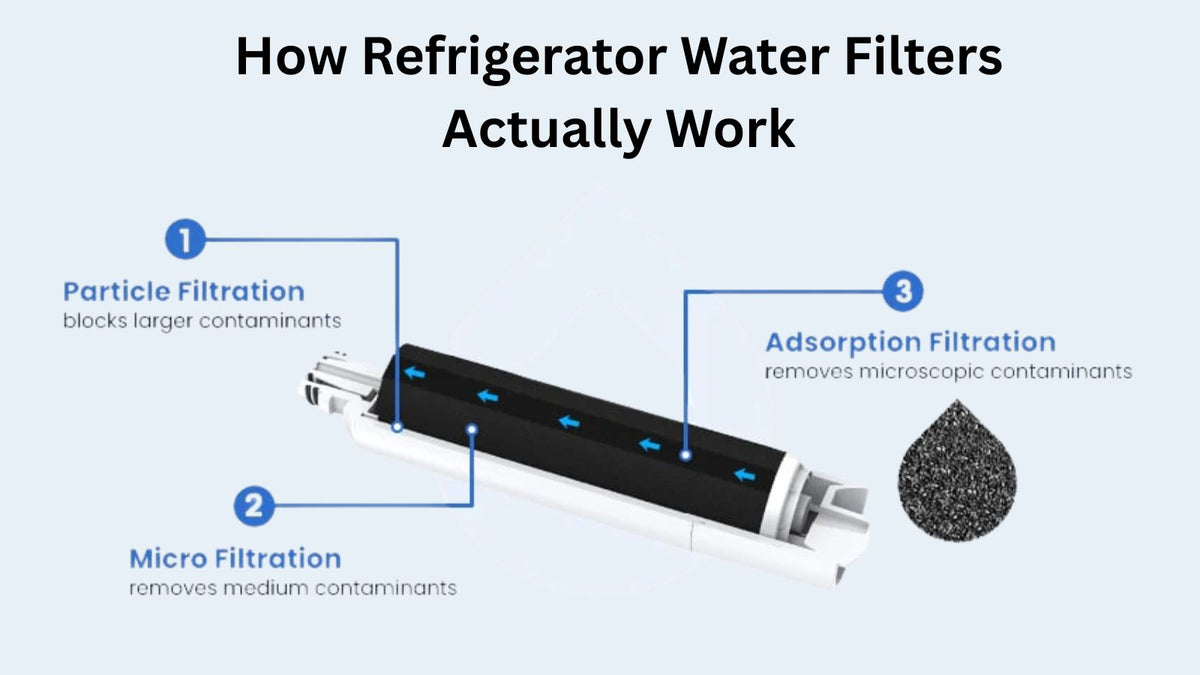
Refrigerator water filters work by passing water through specialized filtration media, commonly activated carbon, that traps particles and adsorbs certain contaminants. The filtered water then flows to the dispenser and ice maker.
Here is the basic sequence of how refrigerator filters work:
-
Water enters the refrigerator filtration system from the supply line.
-
Water pressure pushes the water through the filter cartridge.
-
The filter media traps particles or adsorbs certain substances.
-
Filtered water travels to the dispenser and the ice maker.
The exact process depends on the filter's design and the media it uses. It is also important to understand that refrigerator water filters are not designed to remove every possible contaminant. They reduce specific substances based on their certified performance claims.
What Is Inside a Refrigerator Water Filter?
Activated Carbon
Activated carbon is the most common material found inside a refrigerator water filter. It is made from carbon-rich materials like coconut shells or coal that have been treated to create an extremely porous surface.
This porous surface allows a process called adsorption to happen. Adsorption is when contaminant molecules stick to the surface of the carbon rather than being absorbed into it. Think of it like a magnet attracting metal particles. Activated carbon is particularly effective at reducing chlorine taste and odor as well as certain chemicals and organic compounds.
Sediment Filtration Media
Some refrigerator filters also include a sediment layer. This layer physically captures larger particles like sand, rust, and debris before they reach the activated carbon stage. Physical filtration works simply by blocking particles that are too large to pass through the media's pores.
Not every refrigerator filter includes a dedicated sediment layer. The design depends on the specific cartridge and the manufacturer's intended use.
Additional Filtration Media
Some higher-specification filters use multiple filtration stages with different materials targeting different contaminants. For example, certain filters include ion-exchange media to reduce specific heavy metals. Do not assume that every refrigerator filter contains the same media or delivers the same performance. Always check the manufacturer's certified performance data for your specific cartridge.
Step-by-Step: How a Refrigerator Water Filter Cleans Water
Step 1: Water Enters the Filter
Water flows from the household supply line into the refrigerator. It travels through an internal line and enters the filter cartridge housing. The entry point connects the cartridge to the refrigerator's water supply system.
Step 2: Water Passes Through the Filter Media
Water pressure drives the water through the filter cartridge. The water makes direct contact with the filtration media inside the cartridge. This contact time is important because it allows adsorption and physical filtration to take place.
Step 3: Particles Are Captured
As water moves through the filter, larger particles like sediment, rust, and debris are physically blocked by the filter media. These particles stay trapped in the cartridge while the water continues forward.
Step 4: Certain Contaminants Are Adsorbed
Activated carbon adsorbs chlorine and other contaminants that affect taste and odor. Certain chemicals and organic compounds also bind to the carbon surface during this stage. This is why fresh filtered water usually tastes noticeably cleaner than unfiltered tap water.
Step 5: Filtered Water Reaches the Dispenser
After passing through the filter media, the cleaned water travels through the refrigerator's internal tubing to the water dispenser. You press the dispenser lever and filtered water flows out.
Step 6: Filtered Water Can Reach the Ice Maker
On compatible refrigerator models, the same filtered water supply feeds the ice maker. This means your ice cubes are made from the same filtered water that comes from your dispenser. This is a practical benefit many people overlook.
What Does a Refrigerator Water Filter Remove?
What a refrigerator water filter removes depends entirely on the specific filter's design and certifications. Some commonly reduced contaminants in certified refrigerator filters include:
-
Chlorine taste and odor
-
Sediment and particulate matter
-
Lead
-
Certain volatile organic compounds (VOCs)
-
Certain chemicals like benzene
-
Other contaminants listed in the filter's specific performance data
For a detailed breakdown, visit the what does a refrigerator water filter remove guide.
Does Every Refrigerator Water Filter Remove the Same Contaminants?
No. Filter media, design, certification level, and capacity all vary between models. One filter certified to NSF/ANSI 42 covers chlorine taste and odor. Another certified to NSF/ANSI 53 also covers health-related contaminants like lead. A filter certified to NSF/ANSI 401 additionally covers certain emerging contaminants.
Always check the specific filter's performance data rather than assuming all filters work the same way.
What Refrigerator Water Filters Don't Remove
This is just as important as knowing what they do remove. Refrigerator water filtration systems are not designed to be all-in-one water treatment solutions. Depending on the specific filter, they may not remove:
-
Bacteria or viruses
-
Fluoride
-
Dissolved salts or minerals
-
All heavy metals
-
All pesticides or herbicides
-
Contaminants not listed by the manufacturer
If you have known water quality concerns in your area, a refrigerator filter alone may not be sufficient. In those cases, water testing and a more comprehensive treatment system like reverse osmosis may be a better solution. Learn more about activated carbon filtration technology on Wikipedia.
What Is Activated Carbon and How Does It Filter Water?
Activated carbon is a processed form of carbon with an extremely large internal surface area. One gram of activated carbon can have a surface area equivalent to several tennis courts due to its tiny pores and channels.
When water passes through activated carbon, contaminant molecules stick to the surface through adsorption. Adsorption is different from absorption. Absorption means a substance is soaked up into a material. Adsorption means it sticks to the surface of the material.
This is why activated carbon is so effective at improving taste and odor. Chlorine and chloramine molecules bind to the carbon surface and are removed from the water flowing through. However, adsorption capacity is finite. Once the carbon surface is fully loaded with contaminants, it can no longer adsorb more. This is the core reason why regular filter replacement is essential and not optional.
How Long Does a Refrigerator Water Filter Work?
Most refrigerator water filters are rated for approximately 200 gallons or about six months of use. Manufacturers typically recommend replacement at whichever milestone comes first.
However, actual filter life depends on several factors:
-
Daily water usage: A large household using the dispenser heavily will exhaust the filter faster.
-
Water quality: Higher sediment or chlorine levels in the source water load the filter media faster.
-
Ice maker usage: Frequent ice production uses filtered water and shortens filter life.
-
Specific filter design: Some filters have higher or lower rated capacities than others.
Always follow your specific filter manufacturer's replacement guidance. For a detailed guide, read how often should you replace refrigerator water filter.
What Happens When a Refrigerator Water Filter Gets Old?
An old or exhausted filter does not always look dirty or discolored. That is what makes it tricky. Here is what can happen as a filter reaches the end of its service life:
-
The filtration media becomes loaded with trapped contaminants.
-
Water flow from the dispenser slows down noticeably.
-
Water or ice may develop an unusual taste or odor.
-
The filter reaches its rated gallon capacity.
-
The refrigerator's filter indicator light activates.
A filter that looks clean on the outside can still be exhausted on the inside. The activated carbon surface fills up invisibly. This is why replacement schedules exist regardless of how the water tastes. Check signs you need to replace your fridge water filter if you are unsure.
Why Does a Refrigerator Water Filter Slow Down?
A slow water dispenser is one of the most common complaints from refrigerator owners. An old filter is often the cause but not always. Here are the possible reasons:
-
Clogged filter media: Accumulated particles restrict water flow through the cartridge.
-
Exhausted filter capacity: The filter has reached its rated life and needs replacement.
-
Low household water pressure: The refrigerator needs adequate pressure to push water through the filter.
-
Kinked water line: A bent supply line behind the refrigerator restricts flow.
-
Frozen water line: Cold temperatures near the supply line can cause freezing.
-
Faulty inlet valve: The valve that allows water into the refrigerator may need service.
-
Improper filter installation: A filter that is not seated correctly can restrict flow.
Replacing the filter is a good first troubleshooting step. If slow flow continues after installing a new filter, the issue may be with water pressure, the supply line, or the refrigerator itself.
Do Refrigerator Water Filters Make Water Safe to Drink?
This deserves a careful answer. A certified refrigerator water filter can reduce specific contaminants according to its performance claims. But filtration does not automatically make unsafe source water safe.
If your tap water meets local safety standards and your concern is mainly about chlorine taste, odor, or certain common contaminants, a certified refrigerator filter is a practical solution for many households. However, if your water source has known contamination issues or you are on a private well, you may need water testing and a more comprehensive treatment approach beyond a refrigerator filter.
Never assume that filtered water is completely free of all possible contaminants. Always base your decision on your specific water quality situation.
Are Refrigerator Water Filters Worth It?
For most households they offer real practical value. Here is a balanced view:
Benefits:
-
Noticeably better water taste and odor
-
Convenient filtered water directly from the refrigerator
-
Filtered ice on compatible models
-
Reduced dependence on bottled water for many families
Considerations:
-
Cartridges need regular replacement which has an ongoing cost
-
Filtration capabilities vary by filter model
-
Not suitable as the only solution for serious water quality problems
For a household that mainly wants better-tasting water and filtered ice without the inconvenience of a pitcher or bottled water, a refrigerator filter is a practical and worthwhile choice.
Refrigerator Water Filter vs. Other Water Filtration Systems
Refrigerator Filter vs. Pitcher Filter
Pitcher filters are portable and inexpensive upfront but have small capacities and need frequent cartridge changes. A refrigerator filter is built into the appliance and handles higher volumes. Both use activated carbon. A refrigerator filter is more convenient for daily use but costs more per replacement cartridge.
Refrigerator Filter vs. Reverse Osmosis
Reverse osmosis (RO) systems push water through a semipermeable membrane and can remove a much broader range of contaminants including dissolved salts, fluoride, and many heavy metals. RO systems are installed under the sink and require more maintenance. They also produce wastewater during the filtration process. A refrigerator filter is simpler and less expensive but covers fewer contaminants.
Refrigerator Filter vs. Bottled Water
Bottled water is convenient but costly over time and generates significant plastic waste. A refrigerator filter costs less per gallon for ongoing use and produces no plastic bottle waste. Filtration quality varies for both options depending on the specific product.
How to Choose the Right Refrigerator Water Filter
Check Your Refrigerator Model
Find the model number on the label inside your refrigerator door frame or on the interior side wall. Use the manufacturer's compatibility information to match the correct filter to your model.
Check the Existing Filter Number
The part number printed on your current cartridge is the fastest way to find the right replacement. It removes guesswork entirely. For a specific example read Frigidaire ULTRAWF vs WF3CB vs EPTWFU01 to understand why part numbers matter.
Review Filtration Claims
Look at what contaminants the filter is certified to reduce. This information is found on the product packaging or the manufacturer's website.
Check NSF/ANSI Certifications
NSF/ANSI certifications help you compare filtration claims between different filters. NSF 42 covers aesthetic effects. NSF 53 covers health-related contaminants. NSF 401 covers certain emerging contaminants. Different certifications cover different things.
Compare OEM and Compatible Filters
OEM filters come from the original equipment manufacturer. Compatible filters come from third-party brands. Both options can be viable if the compatible filter has proper certification and confirmed compatibility with your refrigerator model. Compare performance claims, certifications, and price before choosing.
How to Replace a Refrigerator Water Filter
Here is a quick overview of the replacement process:
-
Locate the filter compartment inside the refrigerator or at the base grille.
-
Remove the old cartridge by turning or pulling depending on the installation style.
-
Prepare the new filter and remove any packaging or protective caps.
-
Install the new filter and lock it firmly into position.
-
Flush the system by running two to three gallons of water through the dispenser.
-
Reset the filter indicator light if your refrigerator has one.
-
Check connections for any leaks.
For a full step-by-step tutorial visit the how to change frigidaire water filter guide. You can also check instructions for specific models like how to replace water filter Kenmore 9081 or how to replace kenmore water filter 9083.
Can You Clean and Reuse a Refrigerator Water Filter?
Most disposable refrigerator filter cartridges are designed for replacement and not for cleaning and reuse. There is an important distinction here.
Cleaning the filter housing is fine and recommended. Washing the filter cartridge itself is a different matter. Rinsing the cartridge with water can remove loose debris but it does not restore the activated carbon surface. Once the carbon has adsorbed its capacity of contaminants, washing does not reverse that process.
Reusing an exhausted cartridge means drinking water that passes through media that can no longer filter effectively. It is not worth the risk. Replace the cartridge according to the manufacturer's schedule. Visit how to clean a fridge water filter for guidance on cleaning the filter housing properly. When ready to dispose of your old cartridge, check how to recycle refrigerator water filters for responsible disposal options.
Common Misconceptions About Refrigerator Water Filters
"All Refrigerator Filters Remove the Same Contaminants"
This is not true. Filter media, design, and certification vary significantly between models. Always check the specific filter's performance data.
"A Filter Is Good Forever If the Water Tastes Fine"
Water can taste normal even after a filter has reached its capacity. Taste alone does not confirm that the filter is still working effectively. Replace on schedule regardless of taste.
"You Can Wash the Filter and Reuse It"
Washing a disposable cartridge does not restore its filtration capacity. Most cartridges are designed for single-use replacement cycles only.
"A Refrigerator Filter Removes Every Contaminant"
No refrigerator filter removes everything. Each cartridge has specific certified contaminant-reduction claims. Filters do not address bacteria, viruses, fluoride, or dissolved salts unless specifically certified to do so.
"A More Expensive Filter Is Automatically More Effective"
Price does not determine filtration performance. Certification, compatibility, and the manufacturer's specific performance claims are better indicators than price alone.
Frequently Asked Questions
How do refrigerator water filters work?
Refrigerator water filters push water through filtration media, commonly activated carbon, that traps particles and adsorbs contaminants like chlorine. Filtered water then flows to the dispenser and ice maker.
What is inside a refrigerator water filter?
Most refrigerator filters contain activated carbon as the primary filtration material. Some also include sediment layers and additional media depending on the filter design.
Do refrigerator water filters use activated carbon?
Yes. Activated carbon is the most commonly used filtration material in refrigerator water filters due to its effectiveness at reducing chlorine taste and odor.
What does a refrigerator water filter remove?
It depends on the specific filter. Common reductions include chlorine, sediment, lead, and certain chemicals. Always check the certified performance data for your specific cartridge.
Do refrigerator water filters remove bacteria?
Most standard refrigerator water filters are not certified to remove bacteria. Some specialized filters may address certain microorganisms. Check the filter's specific certifications.
Do refrigerator water filters remove lead?
Some refrigerator filters certified to NSF/ANSI 53 are designed to reduce lead. Check your specific filter's certified contaminant-reduction list to confirm.
Do refrigerator water filters remove chlorine?
Yes. Most refrigerator filters certified to NSF/ANSI 42 reduce chlorine taste and odor. This is one of the most common functions of activated carbon filtration.
Do refrigerator water filters remove fluoride?
Most standard refrigerator filters do not remove fluoride. Specialized media or reverse osmosis systems are typically needed for fluoride reduction.
How long does a refrigerator water filter last?
Most refrigerator water filters are rated for approximately 200 gallons or about six months, whichever comes first. Actual life varies with usage and water quality.
How often should you replace a refrigerator water filter?
Most manufacturers recommend replacement approximately every six months. Replace sooner if the filter indicator activates or if water taste or flow changes noticeably.
Can you clean and reuse a refrigerator water filter?
No. Most disposable cartridges are not designed for cleaning and reuse. Washing the cartridge does not restore the activated carbon's filtration capacity.
Why does my refrigerator water filter slow down?
A clogged or exhausted filter is the most common cause. Other causes include low water pressure, a kinked supply line, or improper filter installation.
Are refrigerator water filters worth it?
For most households that want better-tasting water and filtered ice without relying on bottled water, refrigerator water filters offer practical everyday value.
How do I know which refrigerator water filter I need?
Check the part number on your existing cartridge and confirm using your refrigerator model number. Use the manufacturer's compatibility documentation to verify before ordering.
Final Thoughts
Understanding how refrigerator water filters work helps you make better decisions about maintenance, replacement, and what to expect from your filter. Water enters the cartridge and is pushed through filtration media. Activated carbon adsorbs contaminants. Particles are physically trapped. Then cleaner water reaches your dispenser and ice maker.
Every filter has a finite capacity. When the media is exhausted, performance declines even if the water still looks or tastes fine. Follow your manufacturer's replacement schedule and always verify compatibility before buying a new cartridge. A well-maintained filter supports better water taste and keeps your refrigerator running the way it was designed to work.
Find Your Replacement Filter at Frost Water Filter
At Frost Water Filter, we make it simple to find the right replacement cartridge for your refrigerator. Whether you need a filter for a Frigidaire, Kenmore, Sub-Zero, or another brand, our collection includes verified compatible options with clear product information.
Browse Frost Water Filter today and keep your filtered water flowing. Your next replacement cartridge is ready when you are.