
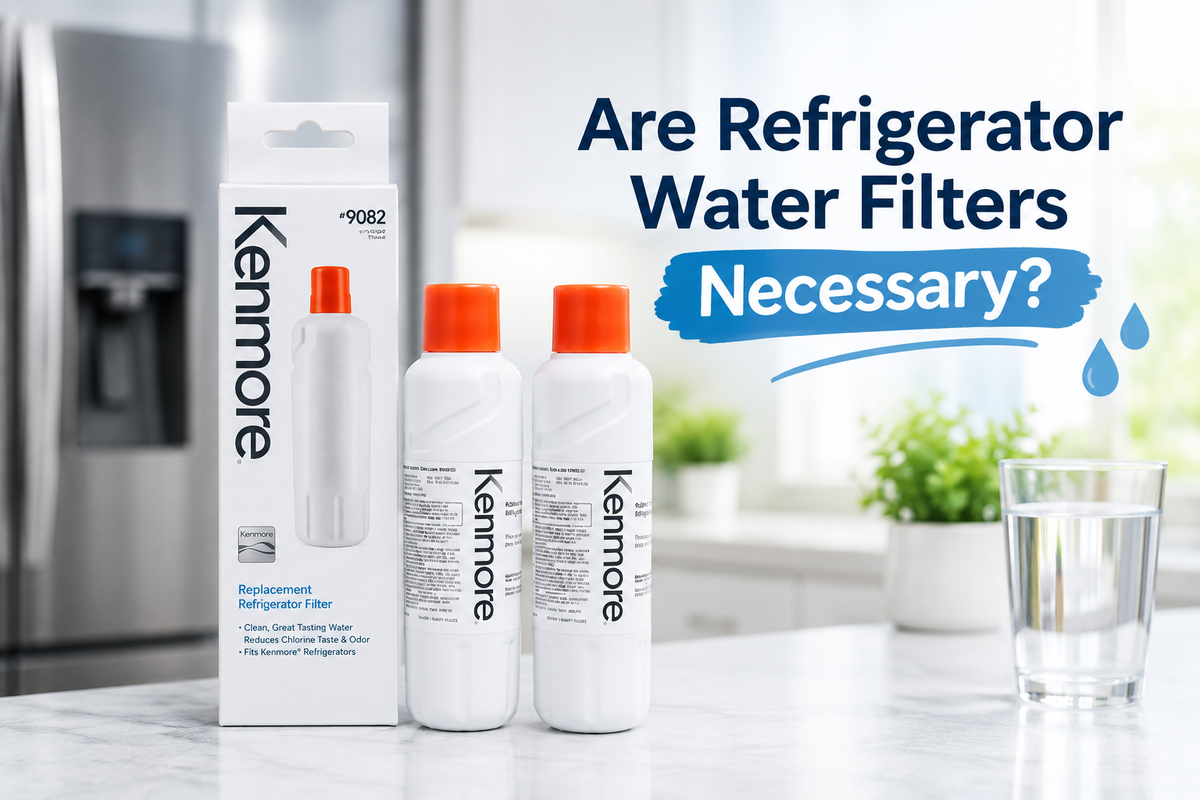
Are refrigerator water filters necessary? Not for every household. They can improve the taste, odor and quality of water and ice from a compatible refrigerator. Your need depends on your local water quality and water source. It also depends on your home filtration and your fridge design. The filter's certified claims matter most.
Picture a glass from the dispenser that smells faintly like a swimming pool. That is often chlorine. A fridge filter can help with that. Still, no filter makes every water safe. If you use the built-in filter you must replace it on time. This guide explains what these filters do and when you need one. It also shows what happens when you skip a change.
What Does a Refrigerator Water Filter Do?
A refrigerator water filter cleans water before it reaches your dispenser and ice maker. Water enters the fridge and flows through a cartridge. The cartridge holds filtration media that trap or reduce certain substances. Cleaner water then flows out to your glass and your ice tray.
Many cartridges use activated carbon. Carbon grabs chlorine and other compounds that affect taste and smell. Some cartridges add other media for sediment or specific chemicals. You can read more about the process in our guide on how refrigerator water filters work.
Different filters have different abilities. One model may target lead. Another may only improve taste. This is why the exact filter matters more than the general idea of refrigerator water filtration.
What Can Refrigerator Water Filters Reduce?
Depending on the certified filter a cartridge may reduce:
-
Chlorine taste and odor
-
Sediment and small particles
-
Lead
-
Certain chemicals
-
Other contaminants listed in the maker's performance data
Claims are specific to each filter. A certification for one cartridge does not apply to another. For a fuller list read our article on what does a refrigerator water filter remove.
Are Refrigerator Water Filters Actually Necessary?
They are helpful for many homes. They are not a rule for every home. The answer to "do I need a refrigerator water filter" comes from your water and your habits. Think of the filter as a useful tool rather than a must-have part.
When a Refrigerator Water Filter Can Be Useful
A filter makes sense in these cases:
-
You dislike the taste or smell of your tap water.
-
Your fridge maker designed the water system around a filter.
-
Your water contains contaminants the filter is certified to reduce.
-
You want filtered water and ice straight from the fridge.
-
You have no other filtration that gives the same treatment.
For example a family that drinks from the dispenser all day gets steady value from a good cartridge.
When a Refrigerator Filter May Be Less Important
A filter matters less when:
-
Your home water is already well treated and filtered.
-
You use a separate certified filter or reverse osmosis system.
-
You never use the water or ice dispenser.
-
The cartridge does not target the contaminants you care about.
Notice the wording. "Not necessary for everyone" does not mean filters have no value. It means the value depends on your situation. If you want a broader view read are refrigerator water filters good.
Can You Use a Refrigerator Without a Water Filter?
Sometimes you can. It depends on the fridge design. Some models offer a bypass plug that lets water flow without a filter. Other models need a filter or a proper bypass part to work as intended. Always check your owner's manual first.
Do not simply pull the cartridge and hope for the best. The water system may not work as expected without it. A refrigerator water filter bypass is a planned option and not a shortcut.
What Happens If You Remove the Filter?
The result varies by model. You may notice:
-
The water dispenser stops working.
-
The ice maker is affected.
-
A filter warning stays on the display.
-
A bypass plug becomes necessary.
-
Water flows differently than before.
If you want to skip filtration ask the manufacturer for the approved bypass part.
What Happens If You Don't Replace Your Refrigerator Water Filter?
An old filter loses strength over time. The media inside fills up and cannot trap as much. This does not mean every expired filter becomes dangerous overnight. It does mean you stop getting the performance you paid for.
Here is what you may notice:
-
Water flow slows down.
-
Taste and odor change.
-
Ice tastes or smells off because it comes from the same water.
-
Filtration claims no longer hold.
Following the maker's schedule keeps performance steady. See the benefits of changing refrigerator water filters regularly for more detail.
How Often Do Refrigerator Water Filters Need to Be Replaced?
Many makers suggest a change about every six months. That is a common guideline and not a law. The right timing depends on the brand and the model. Water quality and daily use also play a role.
Many fridges include a filter-life indicator. It lights up when the cartridge is near the end. Heavy use can shorten the lifespan. A large household that fills bottles often may need a change sooner. Our guide on how often should you replace refrigerator water filter covers this in depth.
Signs Your Refrigerator Water Filter Needs Replacement
Watch for these clues:
-
Slow water flow
-
Changed water taste
-
Unusual odor
-
Strange tasting ice
-
Reduced ice production
-
A filter indicator notification
-
Reaching the recommended replacement period
You can find more tips in signs you need to replace your fridge water filter. Some people also wonder about washing a cartridge. Read how to clean a fridge water filter before you try it.
Are Refrigerator Water Filters Necessary If You Have City Water?
City water is treated before it reaches you. That treatment does not mean every tap has identical water. Pipes and building age can affect what comes out at your sink. A fridge filter can add treatment for specific contaminants if the filter is certified for them.
This does not mean city water is unsafe without filtration. Many people simply prefer better taste. Others want extra reduction for a certain concern. Check your local water quality report to learn more.
Are Refrigerator Water Filters Necessary With Well Water?
Well water is different. A private well is not treated by a city system. The owner is in charge of testing and treatment. Test your well water on a regular basis.
A refrigerator filter has limited and model-specific abilities. It should not act as a full well-water treatment system. Choose treatment based on your test results. Then match the filter to the contaminants you found.
Do Refrigerator Water Filters Make Tap Water Safer?
The answer has some nuance. A certified filter can reduce specific contaminants. That is true only for the claims listed for that cartridge. "Filtered" does not mean every contaminant is gone.
It helps to separate two goals. One goal is better taste and smell. The other goal is reducing health-related contaminants. Many filters do the first well. Only certified filters address the second. Review the maker's data before you rely on any claim. This is also the honest answer to "is refrigerator filtered water safe."
Do Refrigerator Water Filters Remove Bacteria and Viruses?
Standard fridge filters are not built to remove all microorganisms. Activated carbon is not the same as disinfection. Do not assume a cartridge handles bacteria or viruses.
Check the certified claims for your exact filter. If you suspect microbial contamination do not rely on the fridge. Use a proper treatment method and get your water tested.
Do Refrigerator Water Filters Remove Fluoride?
Many standard fridge filters do not target fluoride. Read the performance claims for your exact model. Reverse osmosis and some specialized technologies can have different abilities. Never assume one filter covers what another does.
Do Refrigerator Water Filters Remove Lead?
Some do. Certain cartridges are specifically certified to reduce lead. Others are not. Check the certification for the exact model you plan to buy. Then review the performance data sheet. Do not assume every refrigerator water filter for lead concerns performs the same way.
Refrigerator Water Filter vs. Whole-House Water Filter
These two systems solve different problems. A fridge filter treats water at one point. A whole-house filter treats water at the main supply.
|
Feature |
Refrigerator Water Filter |
Whole-House Filter |
|
Filtration point |
Refrigerator |
Main household water supply |
|
Water treated |
Dispenser and ice system |
Multiple fixtures |
|
Primary use |
Drinking water and ice |
Household water |
|
Capacity |
Generally smaller |
Generally larger |
|
Contaminants reduced |
Filter-specific |
System-specific |
|
Replacement |
Usually cartridge-based |
Depends on the system |
A fridge filter does not replace a whole-house system.
Refrigerator Water Filter vs. Reverse Osmosis
A fridge filter is point-of-use filtration built into your refrigerator. Reverse osmosis is a more extensive process. It can address contaminants that standard fridge cartridges are not designed for.
Some people choose RO when they want that broader reduction. Others are happy with a fridge cartridge for taste and odor. The right choice depends on your water and your goal. You can learn more about the basic technology from this overview of water filters on Wikipedia.
Is Bottled Water Better Than Refrigerator-Filtered Water?
Not automatically. A bottle does not guarantee better treatment. Compare the details instead:
-
Convenience: The fridge gives water on demand.
-
Waste: Bottles add ongoing plastic waste.
-
Storage: Bottles need space and restocking.
-
Cost: Cartridges are a recurring cost but often less than daily bottles.
-
Quality: Check treatment specifications for either choice.
Refrigerator filtration gives filtered water without buying single bottles again and again.
How to Decide If You Need a Refrigerator Water Filter
Use this simple checklist.
You may benefit from one if:
-
You use the fridge water dispenser.
-
You drink refrigerator-filtered water often.
-
You want better taste or odor.
-
The filter is certified for contaminants you want reduced.
-
You have no equivalent filtration.
You may not need one for filtration if:
-
You never use the water or ice system.
-
Another suitable system already treats your drinking water.
-
Your fridge supports a manufacturer-approved bypass setup.
Always follow your refrigerator maker's instructions.
How to Choose the Right Refrigerator Water Filter
Check the Refrigerator Model
Find the exact model number. It is usually inside the fridge or on the back. This step avoids the wrong fit.
Check the Filter Part Number
Match your current cartridge or the part number the maker lists. Similar looking filters may not fit.
Review Certification
Look for applicable NSF/ANSI certifications. A certification relates to specific performance claims. It does not mean the filter removes everything.
Compare OEM and Compatible Filters
Compare these points:
-
Compatibility
-
Filtration claims
-
Certification
-
Price
-
Manufacturer support
Frost Water Filter offers replacement cartridges made for popular refrigerator models. Whichever brand you pick confirm the fit and the claims first.
Don't Choose Based Only on Price
A cheaper filter is not always equal. Compare actual performance specifications before you buy.
Common Myths About Refrigerator Water Filters
Myth 1: Every filter removes everything. False. Each cartridge has its own limits.
Myth 2: City water never needs filtration. Needs depend on your water and your goal.
Myth 3: An old filter is fine if water still flows. Flow alone does not prove performance.
Myth 4: Every fridge needs a filter. Designs differ. Some models offer a bypass.
Myth 5: A fridge filter makes unsafe water safe. Point-of-use filters have clear limits.
Myth 6: All filters perform the same. Claims and certifications vary by model.
What to Do With Your Old Filter
Do not toss it without a thought. Some parts can be recycled. Learn the steps in how to recycle refrigerator water filters.
Frequently Asked Questions
Are refrigerator water filters necessary?
Not for every home. They help when you want better taste or reduction of certain contaminants and your filter is certified for them.
Can I use my refrigerator without a water filter?
Sometimes. It depends on the model. Check your manual for a bypass option.
What happens if I don't replace my refrigerator water filter?
Water flow may slow and taste may change. The filter also stops performing as claimed.
How often should refrigerator water filters be replaced?
Many makers suggest about every six months. Follow your own model's guidance.
Do refrigerator water filters make water safer?
A certified filter can reduce specific contaminants. It does not remove everything.
Do refrigerator filters remove lead?
Only some are certified to reduce lead. Check the exact model.
Do refrigerator filters remove fluoride?
Many standard filters do not. Confirm with the maker's data.
Do refrigerator water filters remove bacteria?
Standard fridge filters are not designed to remove all bacteria. Check the certified claims.
Is a refrigerator water filter necessary with city water?
It is optional. It can improve taste and add reduction for certain contaminants.
Is a refrigerator water filter necessary with well water?
Test your well first. A fridge filter should not be your only treatment.
Can I use a bypass plug instead of a refrigerator water filter?
Often yes if the manufacturer offers one. Use the approved part only.
Are refrigerator water filters worth the money?
They are for many households that use the dispenser daily and want better taste.
Do refrigerator water filters improve taste?
Yes for many people. Carbon filters commonly reduce chlorine taste and odor.
Is filtered refrigerator water better than bottled water?
It depends on the treatment specs. Fridge water is convenient and creates less bottle waste.
Final Verdict
Refrigerator water filters are not necessary for everyone. They still give real value when the filter fits your fridge and is certified for the issues you want to address. Your water source and water quality matter. So do your existing filtration and your fridge design.
If you use the built-in filter replace the cartridge on schedule. That keeps taste and performance steady. Read the certification data and follow your manual. Then you can decide with confidence.
Ready to Replace Your Filter?
Explore the refrigerator water filter collection at Frost Water Filter. Match your model number and pick the cartridge that fits your needs.