
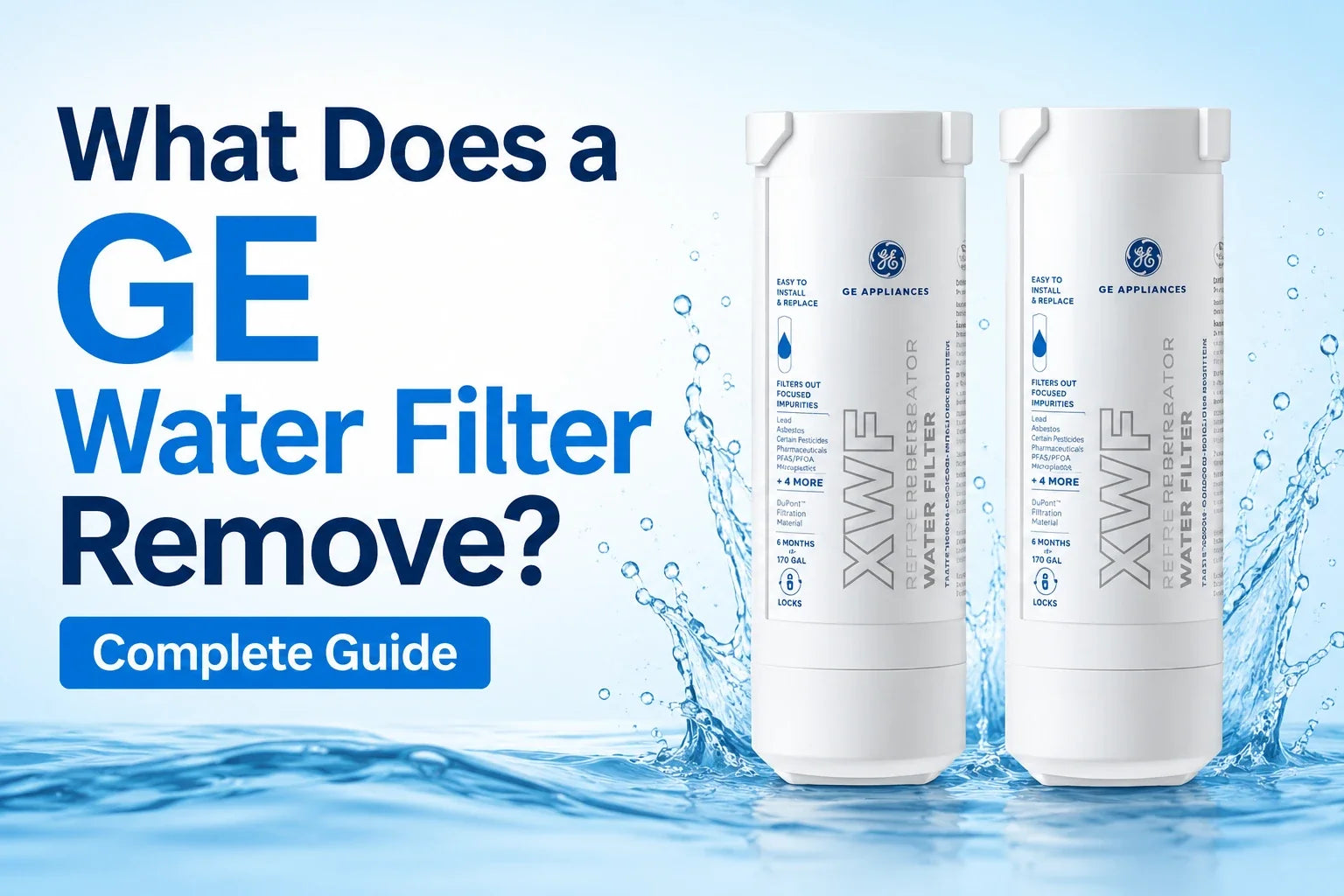
A GE refrigerator water filter removes contaminants such as chlorine taste and odor lead mercury cysts sediment and certain pesticides and chemicals depending on the exact model you own. That is the short answer but the real answer depends on which filter is sitting inside your fridge right now.
Not every GE filter is built the same way. A GE XWFE and a GE MWF do not always reduce the exact same list of contaminants even though both carry the GE name. Before you assume your filter removes lead or PFAS or fluoride it is worth checking that specific filter's own performance data. In this guide we will walk through what does a GE refrigerator water filter remove model by model so you know exactly what is coming out of your tap.
What Does a GE Refrigerator Water Filter Remove?
GE states that its refrigerator filters can reduce contaminants including lead chlorine cysts microplastics PFOA/PFOS pesticides herbicides and sediment though the exact list varies by filter. Broadly speaking most GE refrigerator filters are built to target the following.
-
Chlorine taste and odor
-
Lead
-
Mercury
-
Cysts
-
Sediment and particulates
-
Certain pesticides and herbicides
-
Certain VOCs and chemicals
-
Asbestos
-
PFOA/PFOS on applicable models
-
Select pharmaceuticals on certain GE filters
This is a useful starting point but it is not a guarantee for every single filter GE has ever made. Newer models tend to carry a longer reduction list than older ones.
What Contaminants Does the GE XWFE Filter Remove?
GE says the XWFE is tested to NSF/ANSI 42 53 401 and P473 related requirements and is certified or tested for reduction of more than 50 impurities. That makes it one of the more comprehensive filters in the GE lineup.
The XWFE is commonly documented to reduce the following.
-
Lead
-
Chlorine and chloramine
-
Mercury
-
Cysts
-
Asbestos
-
PFOA/PFOS
-
BPA
-
Select pharmaceuticals
-
VOCs
-
Certain pesticides and herbicides
-
Microplastics
If your refrigerator uses this filter you are getting one of the broader contaminant lists GE currently offers.
What Does the GE MWF Water Filter Remove?
The GE MWF is certified to NSF/ANSI 42 and 53 with additional pharmaceutical reduction claims verified by an independent laboratory. This filter has been on the market for years and remains one of GE's most common replacement filters.
The MWF is typically rated to reduce.
-
Chlorine taste and odor
-
Lead
-
Mercury
-
Cysts
-
Asbestos
-
Certain pesticides
-
VOCs
-
Select pharmaceuticals
-
Other specified contaminants
While the MWF covers a solid range of contaminants its list is slightly narrower than the newer XWFE so it helps to compare the two before assuming they perform identically.
Does a GE Water Filter Remove Lead?
Yes many GE refrigerator filters are certified for lead reduction. Both the MWF and the XWFE carry documented lead reduction certifications which is one of the more important health related claims a filter can make.
That said certification matters here because lead reduction has to be independently tested and verified rather than simply advertised. Not every GE filter model carries the same lead reduction rating so always check the specific model number on your unit rather than assuming all GE filters perform the same way.
Does a GE Water Filter Remove Chlorine?
Yes chlorine taste and odor reduction is one of the most consistent features across GE refrigerator filters. GE states that its refrigerator filters use carbon media to reduce chlorine and improve taste and odor.
The carbon block inside the filter attracts chlorine molecules as water passes through which is why filtered water often tastes noticeably cleaner than straight tap water. This is one of the easiest improvements you will notice right after installing a new filter.
Does a GE Water Filter Remove Fluoride?
Not automatically. Standard GE refrigerator filters are not generally built to remove fluoride and you should never assume this without checking the exact filter's performance sheet.
Fluoride removal typically requires reverse osmosis filtration rather than the carbon block style filtration used in most refrigerator filters. If fluoride reduction matters to your household look specifically for that claim on the performance documentation instead of assuming a standard GE filter handles it.
Does a GE Water Filter Remove Bacteria and Viruses?
This is an important distinction. Reducing certified cysts is not the same thing as disinfecting water against all bacteria and viruses. Cysts like cryptosporidium and giardia are larger organisms that carbon block filters can physically trap.
A standard GE refrigerator filter should not be assumed to remove all bacteria or viruses since these require different filtration methods entirely. If your water source has a known bacterial or viral risk check the specific filter's certification rather than relying on general assumptions.
Does a GE Water Filter Remove PFAS?
Some models do. GE's XWFE documentation specifically lists 99 percent PFOA/PFOS reduction which places it among the filters equipped to handle these so called forever chemicals.
Not every GE refrigerator filter carries the same PFAS claims though. Older models may not have been tested against PFOA/PFOS at all so it is worth checking the model specific performance sheet before assuming your filter offers this protection.
Do All GE Refrigerator Water Filters Remove the Same Contaminants?
No. GE's product documentation shows different contaminant reduction coverage across its filter models and the differences can be significant depending on when the filter was designed.
Here is a quick comparison of popular GE filter models.
|
Filter Model |
Notable Coverage |
|
XWFE |
Broadest list, includes PFOA/PFOS and pharmaceuticals |
|
RPWFE |
Lead, chlorine, cysts, and select chemicals |
|
MWF/MWFP |
Lead, chlorine, cysts, select pharmaceuticals |
|
MSWF |
Lead, chlorine, mercury, cysts |
|
GSWF |
Chlorine taste and odor, sediment, select contaminants |
Because coverage differs across these models the safest approach is always to check your specific filter rather than assuming one GE filter performs like another.
How to Find Out What Your GE Filter Removes
Finding accurate answers is simpler than most people expect if you follow a few steps.
-
Find the filter model number printed on the cartridge
-
Check GE's official specifications for that exact model
-
Review the performance data sheet in detail
-
Look for NSF/ANSI certification numbers
-
Check the individual contaminant reduction claims one by one
This small bit of research takes just a few minutes and removes any guesswork about what your water is actually being filtered for.
How Often Should You Replace a GE Refrigerator Water Filter?
Most GE refrigerator filters follow a six month replacement schedule though filter capacity varies by model. For example GE lists a six month or 170 gallon life for the XWFE whichever comes first.
Watch for these signs that your filter needs replacing sooner.
-
Slow water flow from the dispenser
-
A noticeable change in taste
-
An unusual odor in the water
-
A filter indicator notification on your fridge display
High usage households or areas with harder water may need to replace filters earlier than the standard schedule suggests.
GE Water Filter vs. Generic Filter
Choosing between an OEM GE filter and a generic alternative comes down to a few key factors.
-
Filtration claims OEM filters publish detailed documented claims while generic filters vary widely
-
Certification always confirm NSF/ANSI certification independently for generic filters
-
Compatibility check that the generic filter is designed for your exact refrigerator model
-
Price generic filters are usually less expensive upfront
GE notes that filtration results are not guaranteed when different or generic filters are used with certain systems. This does not mean generic filters are automatically worse but it does mean each one should be evaluated individually rather than assumed equal to the OEM version.
Frequently Asked Questions
What does a GE water filter remove?
Most GE refrigerator water filters reduce chlorine taste and odor lead mercury cysts sediment and select pesticides and chemicals though the exact list depends on the specific filter model.
Does a GE water filter remove lead?
Yes many GE filters including the MWF and XWFE carry certified lead reduction claims though the exact rating can vary by model.
Does a GE water filter remove chlorine?
Yes chlorine taste and odor reduction is a standard feature across most GE refrigerator filters thanks to their carbon block filtration media.
Does a GE water filter remove fluoride?
No, not typically. Standard GE refrigerator filters are not designed for fluoride removal which usually requires reverse osmosis filtration instead.
Does a GE water filter remove bacteria?
Not entirely. GE filters can reduce certified cysts but that is different from removing all bacteria and viruses so check the specific certification for your filter.
Does a GE water filter remove PFAS?
Some models do. The GE XWFE specifically lists 99 percent PFOA/PFOS reduction though not every GE filter carries this same claim.
Does a GE refrigerator filter remove pharmaceuticals?
Select models including the MWF and XWFE include pharmaceutical reduction claims that have been independently verified though this is not universal across all GE filters.
How often should I replace my GE refrigerator water filter?
Most models should be replaced roughly every six months or according to their specific gallon capacity such as the XWFE's 170 gallon rating.
Are all GE refrigerator water filters the same?
No. Contaminant reduction coverage differs across models like the XWFE RPWFE MWF MSWF and GSWF so always check your specific filter's documentation.
Final Thoughts
GE refrigerator water filters can reduce a wide range of contaminants including chlorine lead mercury cysts sediment and in some cases PFAS and pharmaceuticals. The key takeaway is that the filter model matters just as much as the GE brand name itself.
Before assuming your water filter removes a specific contaminant take a moment to check its certification and performance data sheet. This small step ensures you know exactly what your family is drinking. When it is time to replace your filter browse our selection of replacement GE refrigerator water filters including the GE RPWFE Refrigerator Water Filter the GE Refrigerator XWF Water Filter Replacement the GE GSWF Refrigerator Water Filter the GE Refrigerator Water Filter MSWF and the GE MWF Replacement Refrigerator Water Filter to find the exact match for your model.